Banaag
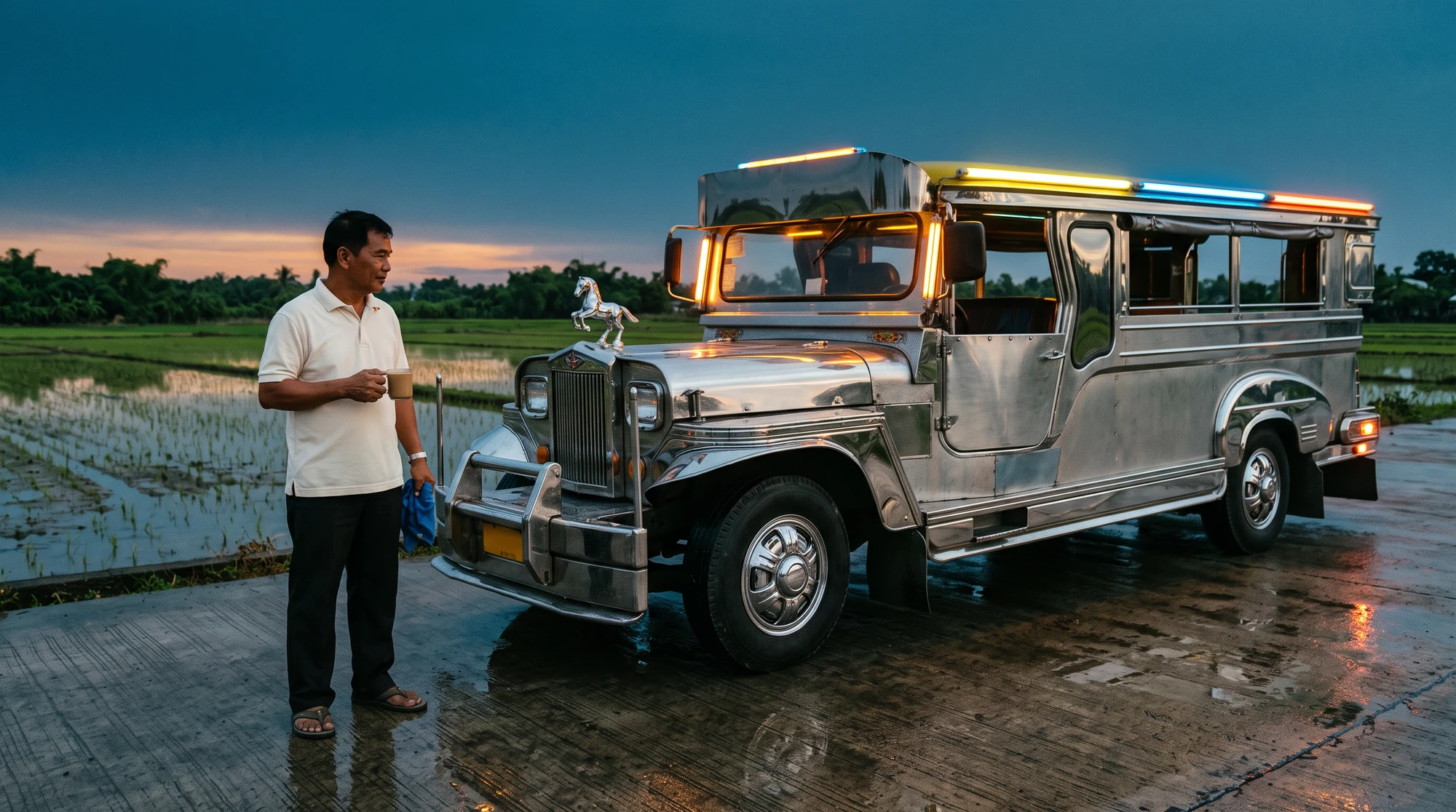
An operator in a white polo stands back on a wet concrete apron beside a rice field at dawn, a mug of coffee in one hand and a folded rag in the other, looking at his stainless-bodied jeepney with its light valance still burning.

04:41pagsikat 05:22

We build the body. You finish it every morning.

The rooster starts up at half four. You carry your coffee out to the unit you are still paying for, find one spot of dust on a panel you polished last night, wipe it off, and stand there a minute and a half looking at it before the shift.

We build the thing that is worth doing that to. Twenty-two of us, on the highway at Sindalan, since 1978.

22 katao9–14 katawan a year

A body is a hundred and forty panels, and not one of them arrives the shape it needs to be.

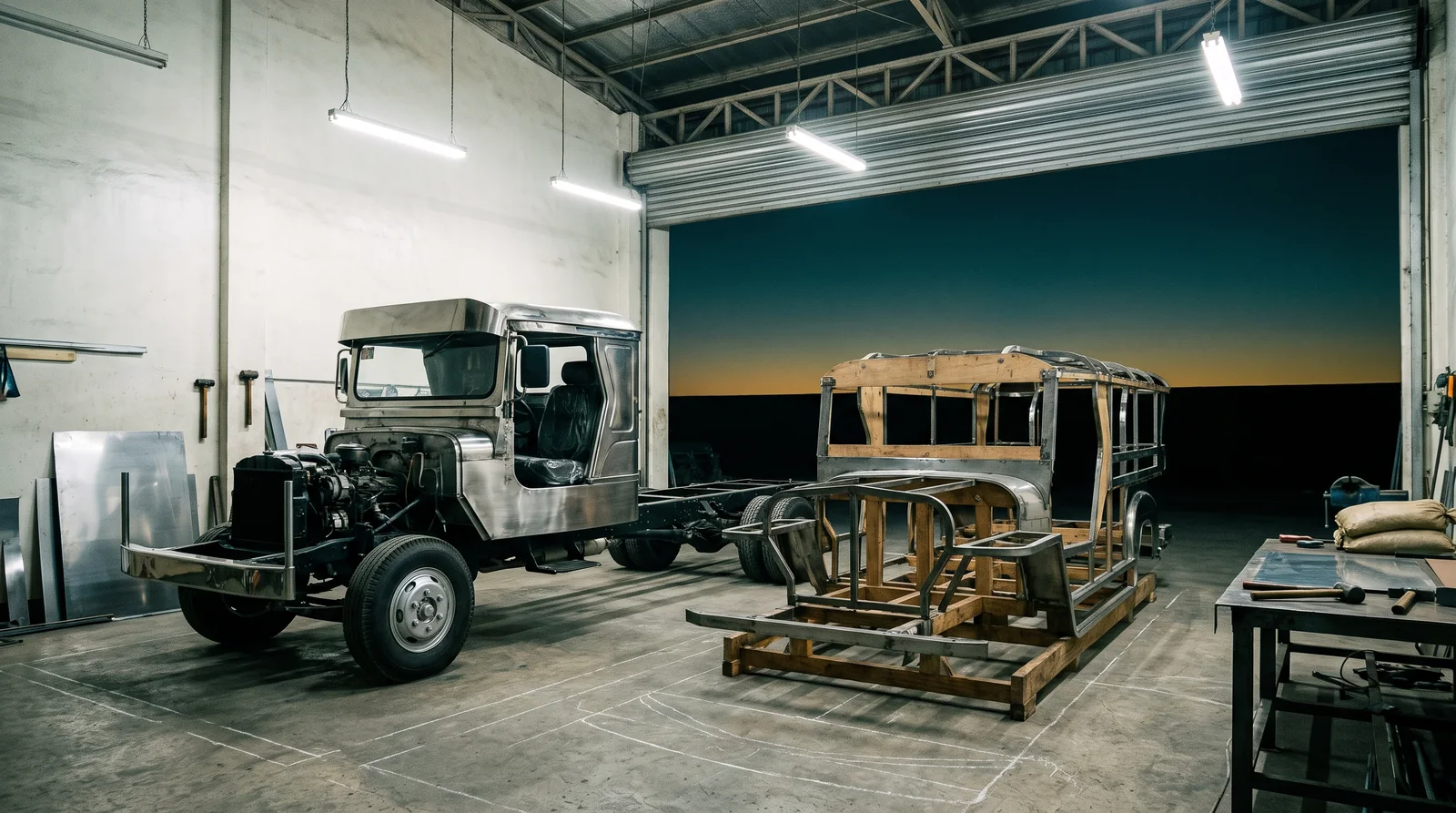
A chassis comes in with an engine, a cab floor and nothing else. Everything above the frame rail we make: ribs bent over the hulma, the wooden buck standing on the floor since Boyet Dizon cut it in 1981, then stainless beaten over the ribs a panel at a time with a hammer and a sandbag. Hulma — a form, a mould.

Before any of it, the whole side is chalked full size on the concrete. You can stand on your own jeepney five months before it exists. Most people do.

The floor argues in Kapampangan and the sheet is written in Tagalog, because that is the language a franchise application is in. Both are on this page, in that order.

Inside the shop before dawn: a bare chassis with its cab and engine on the left, a wooden forming buck on the right, chalk layout lines on the concrete floor, and the open roller door showing a teal sky with a gold band.
The buck on the right has made every Banaag body since 1981. The chalk on the floor is unit 0417, an eighteen for Mexico, Pampanga.

Who we take

We turn work away, but never on what you earn. Nine to fourteen bodies a year is what twenty-two men can do properly, so the question we ask is whether you actually want something.

Come with a picture in your head and we will build that. If you want the same body as everybody else on your route, there are three shops in Guagua who will do it faster and cheaper than us, and we will tell you which ones.

The rules, said out loud

We will not pretend the rules are what they used to be. A new traditional body on a surplus engine cannot be plated as a new franchise, and has not been able to for years now.

So we ask about the paper before the picture. Most of what leaves this gate is a rebody for a unit that already holds a line, for a cooperative that consolidated and kept its route. The rest goes to provincial, private and resort work outside the franchise net entirely.

Tell us your plate, your cooperative and your route, and we will tell you on the phone whether the jeepney you want can be registered. If it cannot, you will have lost the price of a call and nothing else.

What it costs, plainly

Every price on this site is the real price, and the sheet below adds itself up while you change your mind. A whole body runs ₱698,800 to ₱1,551,400 depending mostly on how many people you seat.

Thirty per cent to enter the queue, the rest sa hulugan over 24, 36 or 48 months, with no interest on any of it. A unit on a provincial route brings in roughly ₱700 to ₱1,100 boundary a day, so do the arithmetic against the monthly figure on the sheet before you sign anything — and if it does not work on one unit, say so and we will tell you what does. We take your old body against the price. Nobody here will ask what you do for a living before quoting you. Hulugan — paying by instalment.


1,2 mmstainless, 304

Chalk it out.

We chalk this out full size on the floor before a panel is cut, and this is that drawing. Change anything and it changes with you. When it looks like your jeepney, send it. It is the same sheet whether you are buying a whole body or one chrome horse.

KATAS NG RIYADH SAN FERNANDO — STO. TOMAS 6 790 mm 2 740 mm 620 mm

Swipe the drawing →

18 upuan on an Isuzu 4BE1 · 6,790 mm over bumpers · 6 bays

Katawan — the chassis under it
Kapasidad — how many people sit down
Bubong — the roof
Kabayo — the chrome
Ilaw — the valance
Pinta — the letrista's hand

₱2,400to ₱52,000, fitted

The parts people stop and look at.

None of this is decoration in the sense of being optional. A jeepney that nobody picks out of a line of six at a corner in the dark does not earn. Every fitting here is doing that job, and every one of them can be bought on its own for a unit you already run.

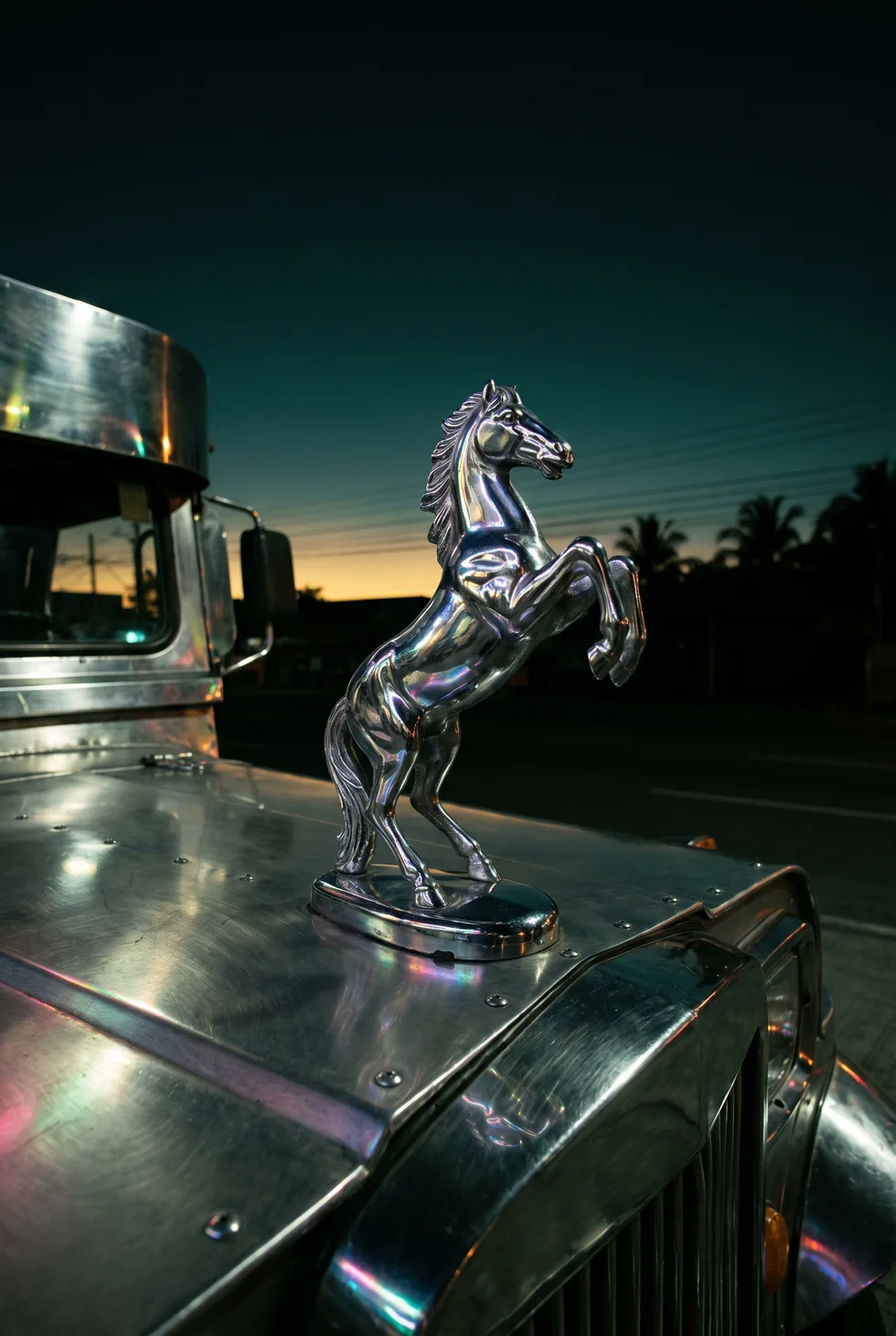
Kabayo — the chrome stallion

Kabayo

Sand-cast in Angeles, filed by hand, then triple-plated. It is bolted through the hood with a backing plate, not screwed into sheet, because a horse that works loose drums against the panel at every pothole and the driver hears it for a thousand kilometres.

Taas
310 mm
Bigat
2,4 kg
Yari sa
brass, chrome over nickel
Kabit
M8 through-bolt, 3 mm backing plate
Gawa sa
Fundición Sy, Angeles
Presyo
₱9,500, kabit na
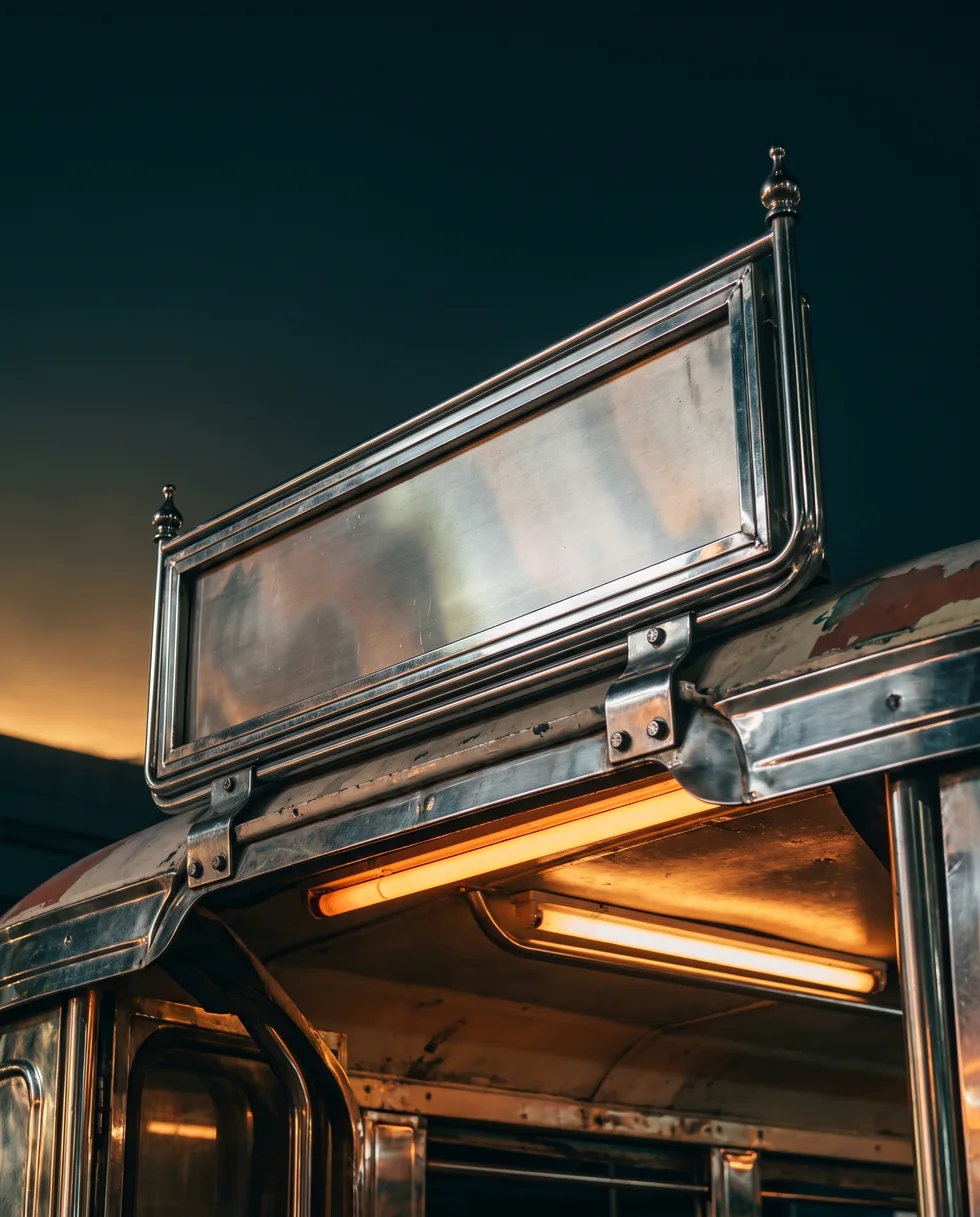
Karatula — the route board

Karatula

The only part of a jeepney a stranger reads. A stainless channel with cast finials, and a flat panel inside it that Nolan letters by hand, because a vinyl sticker on a route board fades to grey in fourteen months of Luzon sun and hand enamel does not.

Sukat
1 640 × 300 mm
Plantsa
1,2 mm stainless, 304
Letra
hand-lettered enamel, two coats
Kasama
harap at dalawang gilid
Ilaw
wired for a tube behind, if ordered
Presyo
₱14,000, kabit na
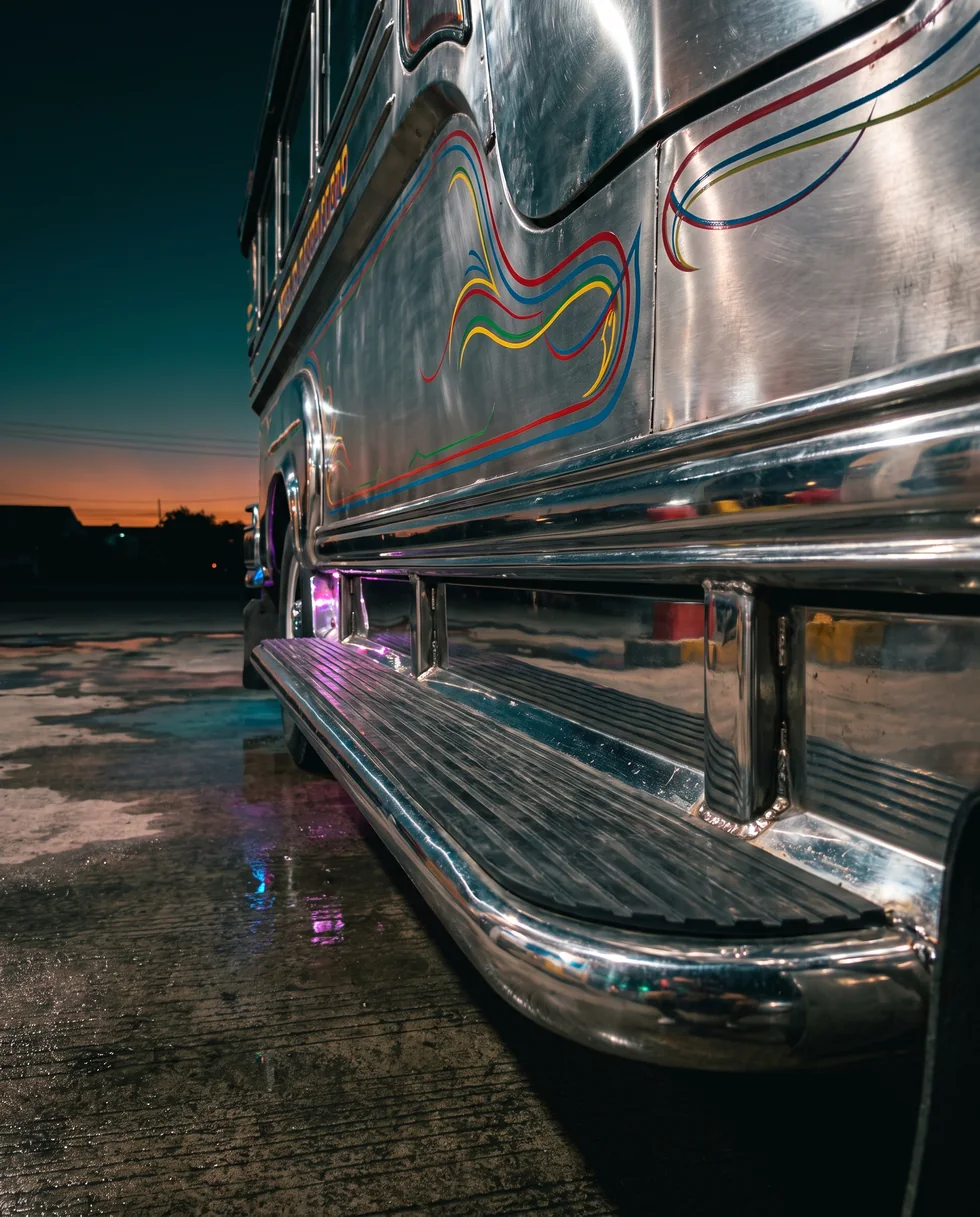
Estribo — the running board

Estribo

Everybody who ever rides steps on it, twice. Ours is a folded box section rather than an angle, so it does not oil-can under a man carrying a sack of rice, and the tread is bolted rubber that can be replaced in the yard for ₱600 instead of the whole board.

Haba
2 400 mm bawat gilid
Seksyon
folded box, 2,0 mm
Tapakan
ribbed rubber, bolted
Bracket
6 bawat gilid, welded
Saklaw
pares, chromed, kabit na
Presyo
₱18,500, kabit na
Salamin — the mirrored ceiling

Salamin

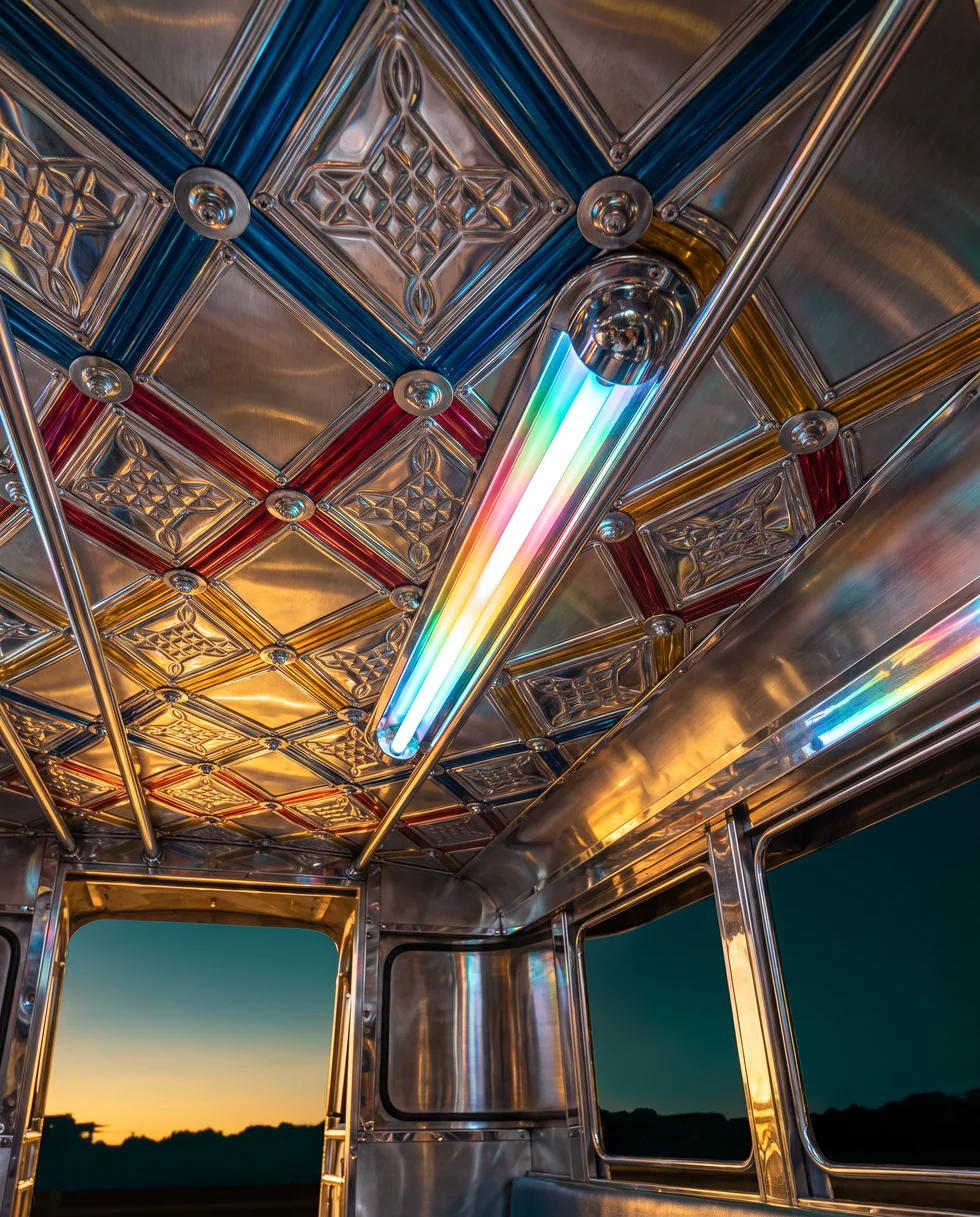
Pressed anodised panel in a diamond, screwed at every joint with a chrome cup washer. It is not there to be looked at directly. It is there to take one fluorescent tube and give back forty, which is how a jeepney interior gets bright without more electricity.

Panel
0,6 mm anodised aluminium
Pattern
diamond, 90 mm pitch
Sakop
buong kisame at poste
Kabit
chrome cup washer, 8 mm
Oras
dalawang araw sa dalawang tao
Presyo
₱21,000, kabit na
Sabit — the hangings

Sabit

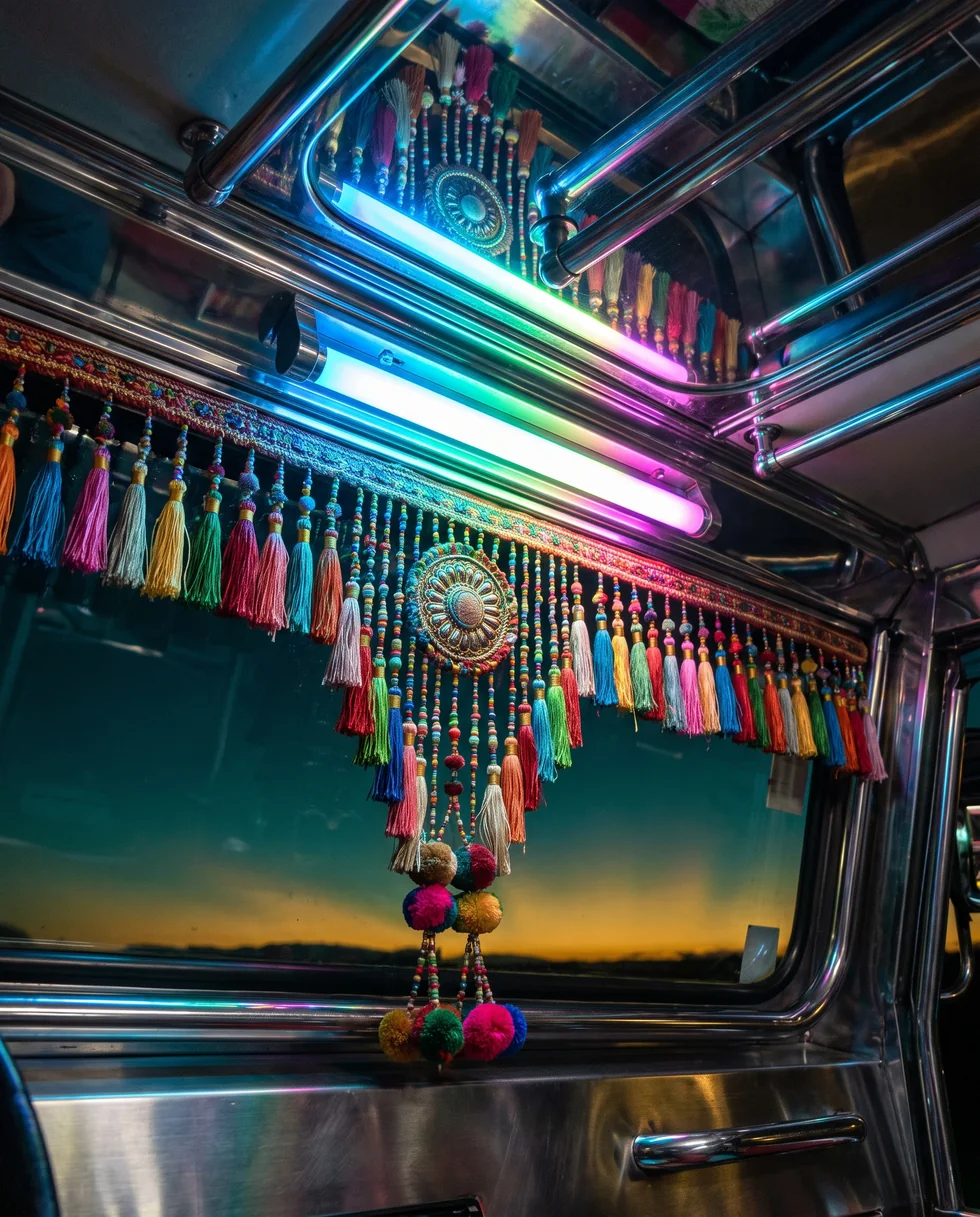
Tassels, beads, and whatever the operator's family decides belongs there. The cheapest thing on this page and the first thing anybody notices. We fit the rail; what hangs off it is not our business, and it should not be.

Rail
chromed, 12 mm, full width
Kasama
12 tassels, 2 medallions
Kulay
sabihin mo lang
Saklaw
buong set, kabit na
Bilin
walang haharang sa salamin
Presyo
₱2,400, kabit na
Tubo — the light valance

Tubo

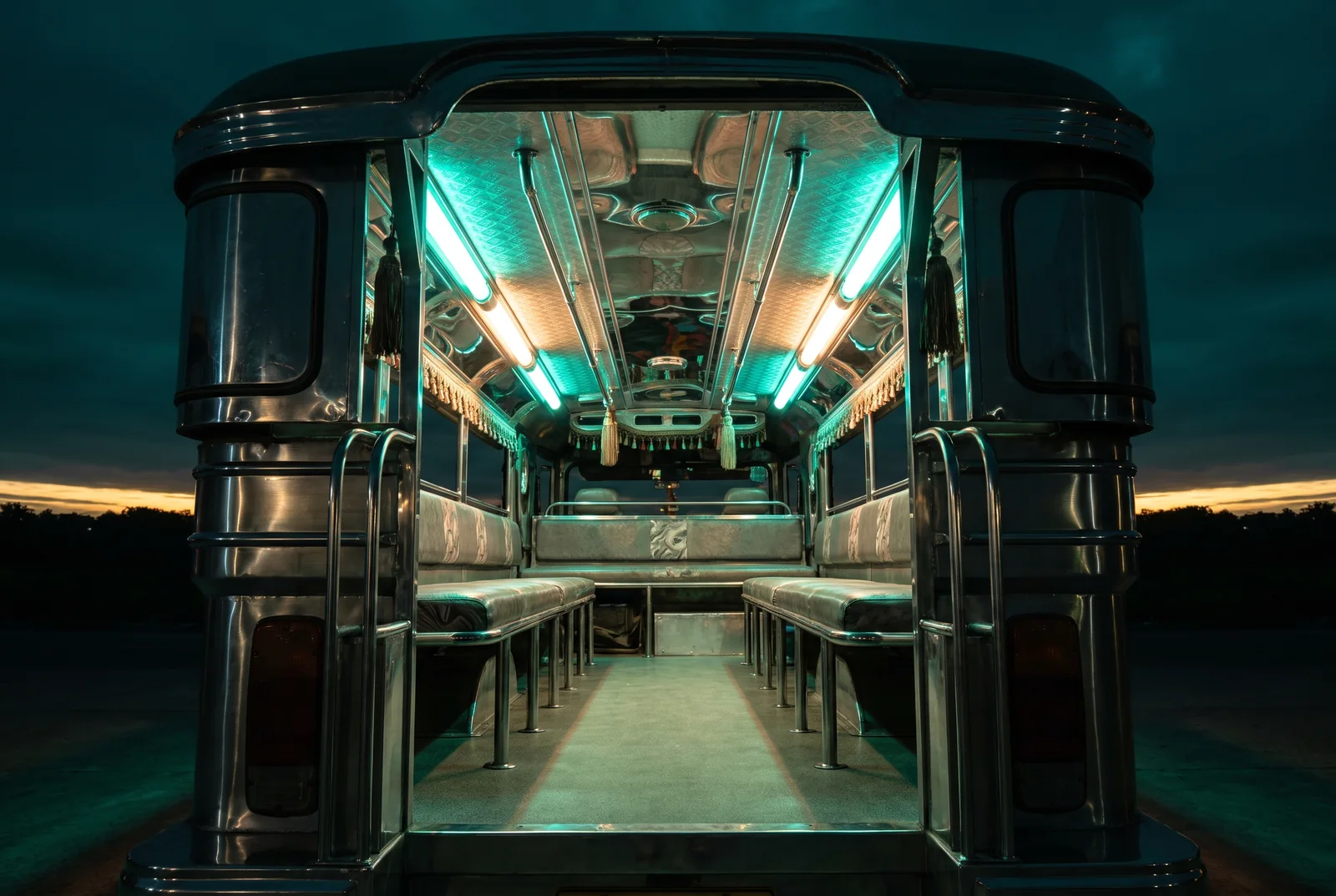
A single row of coloured fluorescent under each roof edge, in a chromed reflector channel, on its own fused circuit off the second battery. This is the fitting that decides what your jeepney looks like at 04:41, when the queue at the corner is choosing.

Bawat gilid
4 × 600 mm tubes
Kulay
aqua, rosas, berde, asul, ginto
Sirkito
fused, second battery
Channel
chromed reflector, riveted
Dagdag
rotor sequencer, ₱42,000
Presyo
₱26,000, kabit na

29 taonsa brotsa

Nolan cuts the words to fit the board.

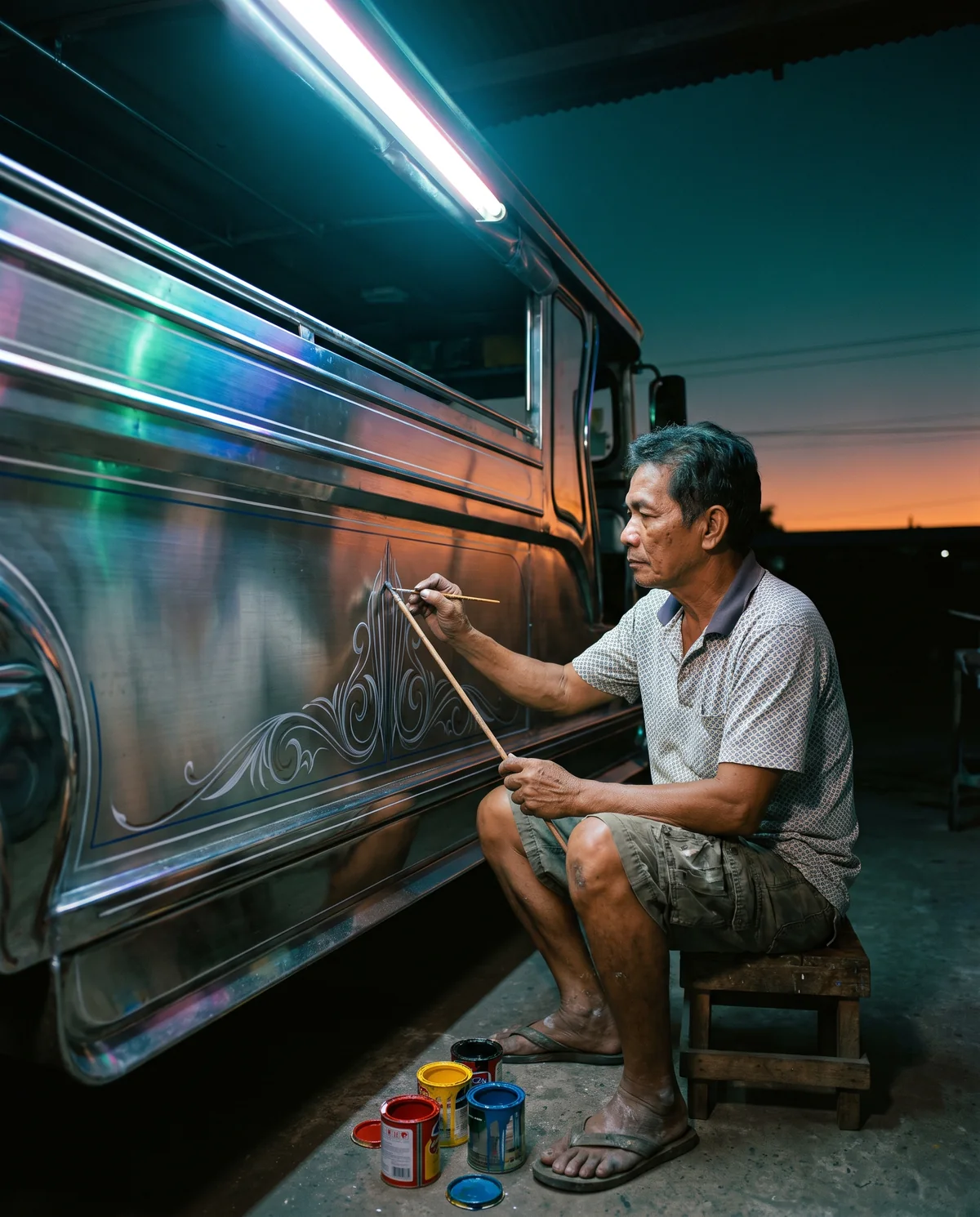
A sign painter sits on a low stool beside a jeepney flank, steadying his brush hand on a mahl stick, laying a silver scroll flourish onto the stainless panel under a fluorescent tube.
Nolan Simbulan, on the mahl stick. The scroll goes on before the lettering, because the letters have to sit inside it.

There is no vinyl in this shop. Everything written on a Banaag body is enamel, laid by one man with a sable brush and a stick to steady his wrist, and it is the last thing that happens before a body is brought out.

He works in four hands, and he will tell you which one your route wants: blok for a long name that has to stay readable at forty metres, bilog when the board is short and the name is not, eskrito for a dedication meant to be read slowly, and sombra — block with a dropped shadow and a chrome outline — when somebody wants their mother's name on the side of a vehicle to be the first thing you see from across the highway.

A route board set is ₱14,000 — the front and both sides. A dedication is included, and so is a saint; Nolan has never once written one down on the sheet.


1904unang Ligligan Parul

The lanterns taught us the lights.

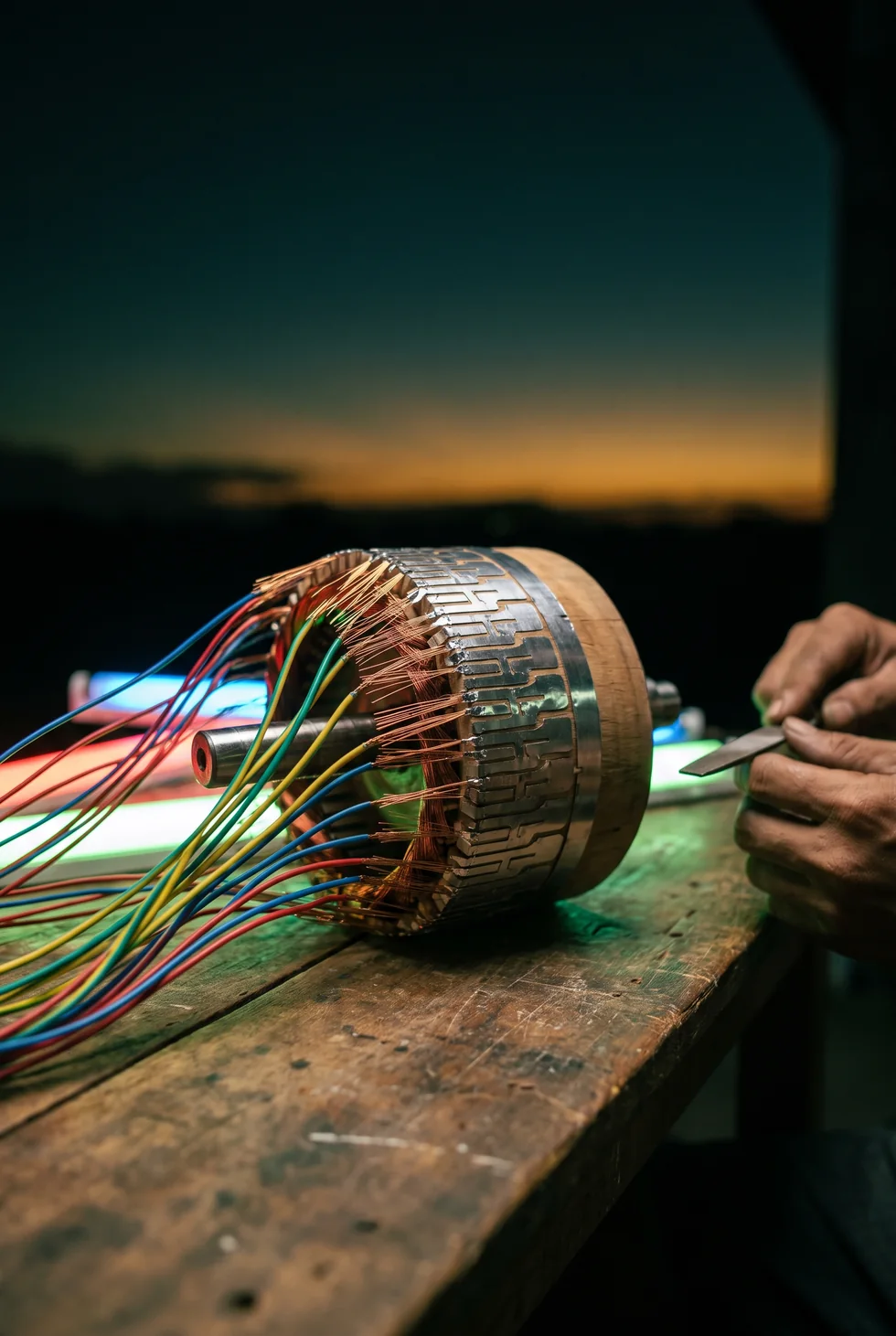
San Fernando has run the giant lantern festival since 1908. The lanterns are five metres across and carry thousands of bulbs, and what makes the light run around them is not a circuit board. It is a rotor: a wooden drum wrapped in cut foil contacts that a wireman files by hand, one strip at a time, until the pattern in the lantern matches the pattern he has in his head.

Then the wireman lays a strip of tape on the barrel, and wherever the tape is, the hairpin lifts off the steel and the bulb goes dark. So the pattern is never written. It is cut as silence — he tapes the light away until what is left is what he heard in his head.

That is the same trade as a light valance, done by the same families, in the other half of the year. Boyet Dizon wired parol before he ever welded a rib. It is why the electrician is the most senior man on this floor after the panel beater, and why we will cut you a rotor for your jeepney if you want your tubes to do more than sit there.

₱42,000, and it takes him eleven days.

Ten hairpins off a four-hundred-hairpin barrel. The dark cells are where the tape is.
A hand-built lantern rotor: a steel barrel banded with cut strips, dozens of fine wire hairpins resting on it, and bundles of coloured wire fanning away across a worn bench.
A barrel part-taped. Each hairpin is one bulb; each strip is how long that bulb stays dark.

521katawan since 1978

Mga inilabas.

What has left the gate, and who it went to. Tap a line and the sheet above goes back to that specification. It is the fastest way to start from something that already works on a route like yours.